The only storm on Iceland elopement day guide you'll ever need.
Eloping in Iceland means embracing a landscape where weather is never just a background detail — it’s an active part of the experience. Storms, wind, rain, and fast-changing conditions are common, and understanding how they work is essential when planning an Iceland elopement day.
This guide explains everything couples need to know about Iceland elopement storms: what weather warnings really mean, how to plan flexible timelines, when to pivot locations, and how to stay safe while still creating a powerful, intimate ceremony. With the right preparation, storms don’t ruin elopements in Iceland — they often make them unforgettable.
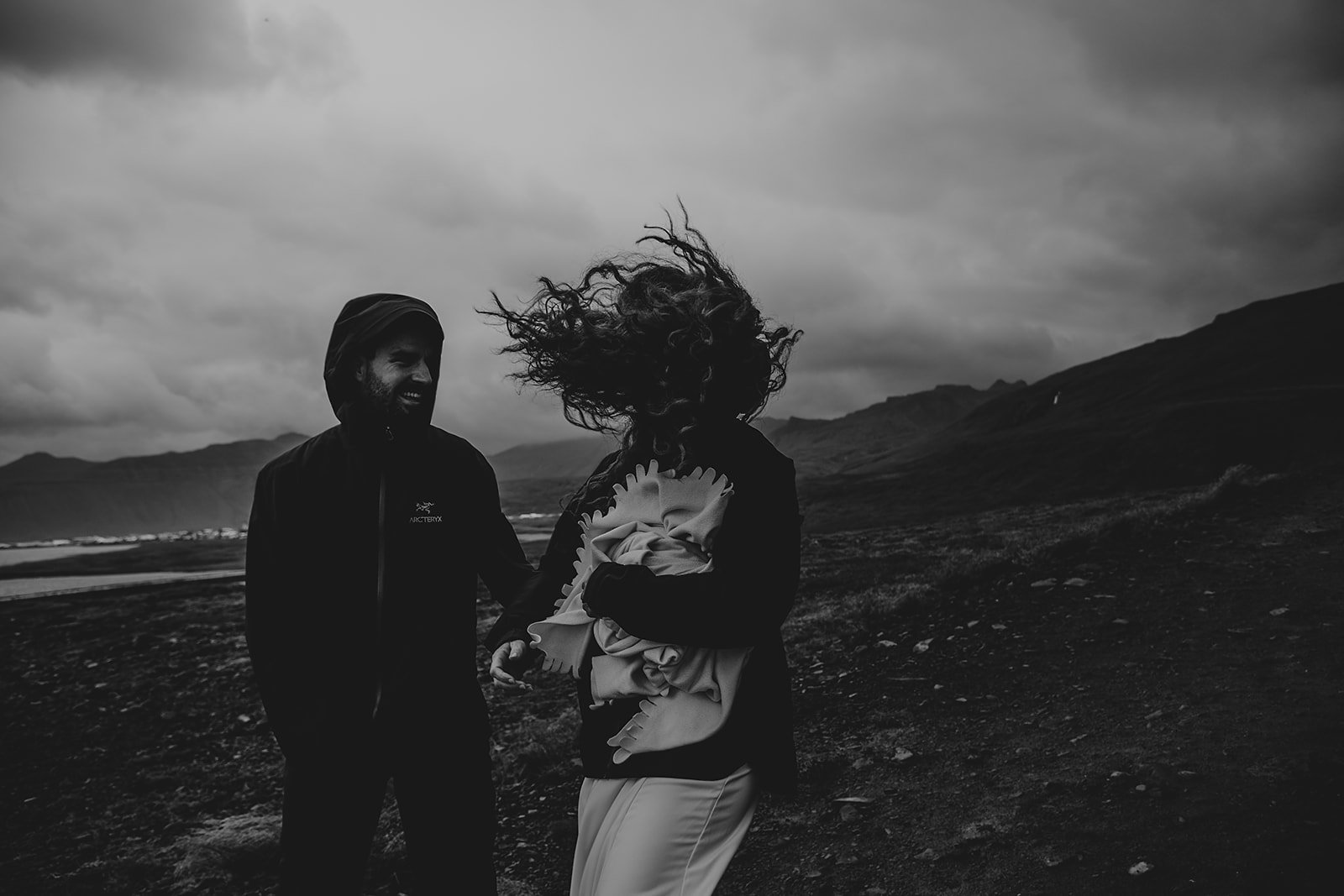
The storms on Iceland's elopement day
Here’s the truth: most couples only realise after their elopement day:
Storms during an Iceland elopement aren’t rare disruptions — they’re part of how this country breathes.
They aren’t mistakes.
They aren’t failures.
And they aren’t a sign that something has gone “wrong.”
What no one explains clearly enough is that Iceland doesn’t reward couples who chase perfect forecasts. It rewards couples who understand rhythm, timing, and flexibility. Weather here doesn’t arrive as a single, all-day event. Storms move in waves. They shift direction. They soften. They create unexpected pockets of calm — sometimes cinematic, sometimes quiet, sometimes deeply intimate — if you know how to move with them.
Online, Icelandic storms are often framed as something to fear. Wind alerts look dramatic. Rain icons feel ominous. But in real life, most stormy elopement days don’t unfold as constant chaos. Instead, they come with texture: fast-moving clouds, bursts of rain followed by stillness, wind that clears crowds and leaves the landscape feeling raw and alive.
This is where expectations often clash with reality.
Many couples imagine storms as full-day disasters — soaked clothes, cancelled ceremonies, ruined photos. In reality, storms often slow things down. They strip the day back to what matters. There’s less rushing. Less pressure to perform. Less focus on how everything looks and more attention on how it feels.
Some of the most meaningful elopement days I’ve witnessed happened because of storms — not despite them.
And something unexpected happens: privacy increases. Tour buses reroute. Popular locations empty out. The landscape feels more personal, more intimate, more yours.
This doesn’t mean storms should be ignored or underestimated. Icelandic weather demands respect — always. But respect doesn’t mean fear. It means planning with awareness instead of rigid expectations. It means building timelines with buffer space. It means choosing locations with natural shelter nearby. It means understanding that a storm doesn’t cancel your elopement — it reshapes it.
When couples look back on their day, they rarely talk about the wind or rain as negatives. They talk about how present they felt. How the landscape seemed to respond to them. How the intensity of the weather mirrored the gravity of the promises they made.
That’s what people don’t tell you.
Storms don’t steal meaning from an Iceland elopement.
They often give it weight.
And when you plan for them properly — with backups, flexibility, and a safety-first mindset — storms stop being something you try to avoid.
They become part of the story you’ll never forget.

How Different Seasons in Iceland Affect Your Elopement Day Planning
One of the biggest planning mistakes couples make when eloping in Iceland is treating seasons like a backdrop instead of a decision-making tool. Each season shapes not just the look of your day, but the logistics, flexibility required, and how storms behave. Understanding this upfront helps you plan realistically — and stress less when weather shifts.
Winter in Iceland (November–March): Beauty, Ice & Storm Windows
Winter elopements in Iceland are cinematic and bold. Think Northern Lights, blue ice caves, frozen waterfalls, and snow-covered landscapes. But winter is also the most volatile season for weather.
Storms are stronger, daylight is limited, and wind speeds can reach unsafe levels quickly. Snowstorms may cause road closures, especially outside the South Coast. Planning a winter elopement means working with short weather windows, building in backup days, and choosing locations that allow flexibility if conditions change.
Winter rewards couples who plan with safety, patience, and a willingness to pivot — not rigid timelines.
Spring in Iceland (April–May): Thawing, Transitional & Unpredictable
Spring is a true shoulder season. Daylight increases rapidly, temperatures soften, and the landscape begins to wake up — but winter hasn’t fully let go.
Snow can linger in higher elevations, some roads remain closed, and wind or sleet storms are still possible, especially in early spring. The upside? Storms tend to be shorter and less intense than in winter, and crowds are lighter than in summer. With warm layers and a flexible plan, spring elopements offer a balance between winter drama and summer ease.
Summer in Iceland (June–August): Accessibility & Long Days
Summer is the most stable season weather-wise and the most popular time to elope in Iceland. Long daylight hours — including the midnight sun in June — make it ideal for extended adventures and accessing remote regions like the Highlands.
That said, the Icelandic summer is not “guaranteed sunshine.” Wind and rain showers can still roll in quickly, even on calm days. Major storms are rare, but preparation still matters. Layered clothing, waterproof gear, and a relaxed mindset ensure you enjoy the day no matter what the sky does.
Autumn in Iceland (September–October): Mood, Light & Rising Winds
Autumn elopements are moody, intimate, and often overlooked. Golden tones, early sunsets, and fewer tourists create a cosy atmosphere — but it’s also when storm activity begins to increase again.
Wind speeds rise, rain becomes more frequent, and conditions can shift quickly from calm to intense. Early autumn is generally manageable, while mid-to-late October requires more flexibility. With the right planning and local insight, autumn elopements can feel deeply atmospheric and personal.

When Weather Forces You to Change Your Elopement or Wedding Plans in Iceland
In Iceland, weather isn’t just a backdrop — it’s a safety factor. While light rain or wind rarely impacts an elopement day, there are moments when conditions cross from “moody” into genuinely unsafe. Knowing when to adjust your plans — and when not to push forward — is a critical part of planning an elopement here.
Iceland uses an official, colour-coded weather alert system issued by the Icelandic Meteorological Office. These alerts guide locals, emergency services, and travellers on how to respond when conditions change.
Iceland Weather Alerts Explained
Yellow Alert — Be Cautious
Conditions are shifting. Travel is usually still possible, but plans may need adjustments. This might mean changing timing, choosing a more sheltered location, or reducing driving distances.
Orange Alert — Stay Put
Strong winds, heavy snow, freezing rain, or dangerous visibility. During orange alerts, travel plans should be changed entirely. Roads may begin closing, and moving locations is often unsafe.
Red Alert (Rare) — Do Not Travel or leave your accommodation
Severe storm conditions. Travel is discouraged or prohibited. Emergency services are on high alert, and road closures are enforced.
When an orange or red alert is issued for your elopement location, that’s when we reschedule or reroute — not because the day is “ruined,” but because safety always comes first.
What Happens When Plans Need to Change
Needing to pivot can feel overwhelming — especially when this is your wedding day. But in Iceland, a weather pivot doesn’t mean starting over. It means adapting with intention.
Roads close quickly during storms. Rescue teams actively block access points. At that stage, there is no safe workaround — waiting is the only option.
That’s why Iceland elopements are planned with Plan A, B, and C from the start.
If your original ceremony location becomes unsafe, we will move to the next best option based on real-time conditions. This might mean:
Swapping a windswept cliff for a sheltered canyon
Choosing a cave or protected valley instead of an exposed pass
Shifting timing to catch a calmer weather window
I always scout multiple nearby locations in advance so decisions can be made calmly and quickly. Flexibility keeps the experience magical — even when the weather has other ideas.
What Not to Do During Storm Alerts in Iceland
Never ignore official weather alerts. They exist to keep people alive.
Do not travel when advised to stay put. Roads may be closed without warning.
Do not “just step outside quickly.” Wind chill and flying debris can be dangerous even near accommodation.
Storms here are powerful enough to overturn vehicles — including buses. This is not exaggeration; it’s reality.
Where to Check Weather & Safety Alerts
Always rely on official sources:
Vedur.is — Icelandic Meteorological Office
SafeTravel.is — Road conditions, alerts, and travel safety
Both platforms also offer mobile apps, which I strongly recommend downloading before arrival.
Weather alerts are typically issued 1-2 days in advance, though last-minute updates can happen. This is why flexibility and local monitoring matter more than fixed schedules.

Storm Psychology: Expectations vs Reality on an Icelandic Elopement Day
One of the biggest challenges couples face with Icelandic weather isn’t the storm itself — it’s the expectation of what a storm means.
Most people arrive imagining storms as a full-day disaster: cancelled ceremonies, ruined photos, constant chaos. That expectation comes from places where storms behave differently — where bad weather is all-or-nothing.
Iceland doesn’t work like that.
Storms here move in waves, not blocks. Wind surges, then softens. Rain hits sideways, then clears completely. Clouds race across the sky, opening pockets of light that feel almost unreal. What looks dramatic on a weather app often plays out very differently on the ground.
This mismatch between expectation and reality is where stress comes from.
Couples who struggle most on stormy elopement days are usually trying to force the original plan instead of working with the conditions. Couples who thrive are the ones who understand this early:
Storms slow the day down
They increase privacy by clearing crowds
They strip the experience back to presence and intention
They add emotional weight to vows, not chaos
When wind rises, people instinctively move closer. When rain hits, moments become quieter, more deliberate. The intensity of the weather often mirrors the intensity of what you’re doing — committing your life to another person.
This is why many couples later say their stormy elopement felt more meaningful, not less.
The key isn’t hoping for calm skies.
It’s planning with flexibility so weather becomes texture, not tension.

Storm Decision Flowchart: What Actually Happens on Your Elopement Day
This is how weather decisions are made in real time — calmly, safely, and strategically.
Step 1: Check Official Alerts
Green / No Alert → Proceed as planned
Yellow Alert → Adjust timing or location slightly
Orange Alert → Stop travel, reroute, or reschedule
Red Alert → Stay put, no exceptions
Decisions are based on Vedur.is and SafeTravel.is, not your phone weather apps.
Step 2: Assess the Location Risk
Ask:
Is this location exposed to wind?
Is there shelter nearby?
Are there safe exit routes if conditions worsen?
If the answer is “no”, → we pivot locations, not timelines.
Step 3: Choose the Right Pivot Path
Option A — Same Location, Different Timing
Storms often soften for short windows. We wait it out and move when conditions ease.
Option B — Nearby Shelter Location
Cliff → canyon
Open beach → cave
High pass → valley
Same emotional impact. Safer conditions.
Option C — Backup Day or Region
Used when roads close or travel is restricted.
Step 4: Safety Check (Non-Negotiable)
We do not proceed if:
Roads are officially closed
Wind exceeds safe thresholds
Emergency services advise against travel
No photo or plan is worth risking safety.
Step 5: Reset the Mindset
This is where everything shifts.
Instead of:
“This isn’t what we planned.”
We anchor to:
“This is still our wedding day — just unfolding differently.”
Some of the most cinematic, intimate elopements I’ve ever photographed happened because of this pivot moment.
When you plan with buffers, backups, and trust, storms stop being something to fear and become part of a story that feels honest, powerful, and unforgettable.
FAQ ON ICELAND ELOPEMENTS ON A STORMY DAY
Will storms ruin my Iceland elopement photos?
Not if you plan correctly. Storms often create dramatic skies, fewer crowds, and a more intimate atmosphere. The key is wearing proper layers, choosing locations with shelter options, and building buffer time so you can work with weather windows instead of fighting them.
Do we need to reschedule if it’s raining?
Usually, no. Light rain is normal in Iceland, and elopements can still happen comfortably with waterproof layers and a smart timeline. We only reroute or reschedule when conditions become unsafe (like orange/red alerts, road closures, or extreme winds and rain).
When do you actually change the elopement date because of the weather?
If an orange or red weather alert is issued for your area, or if roads are closed and travel is restricted. Safety is the deciding factor — not “bad vibes” or clouds.
How do we know if it’s safe to travel on the elopement day?
Use official sources: Vedur.is for weather alerts and SafeTravel.is (and road updates) for travel safety guidance. Phone weather apps are not enough in Iceland.
What wind speed is considered unsafe for an Iceland elopement?
It depends on the location, terrain, and exposure, but high winds in open areas can become unsafe quickly. If winds are strong enough to make walking unstable or driving risky, we pivot to a sheltered Plan B location.
Should we plan a backup day for an Iceland elopement?
Yes — especially for winter. A backup day removes stress and gives you the freedom to chase the best weather window instead of being locked into one “must work” date.
What are the best storm-friendly ceremony locations in Iceland?
Places with natural shelter, like canyons, tucked-away valleys, certain waterfalls with protected angles, or even nearby caves and cliff shelters (depending on tides and safety). The best option is always location-specific and chosen based on real-time conditions.
What should we wear if the forecast looks stormy?
Waterproof outer layers, warm base layers, windproof jackets, and proper boots with grip. Add gloves, a hat, and hand warmers. Being warm and dry is what keeps the day enjoyable — and makes the photos look relaxed, not tense.
Storms are part of Iceland’s language.
They shape the land, clear the crowds, and remind you that this place is alive — not curated, not controlled. When you choose to elope here, you aren’t promising yourselves a perfectly polished day. You’re choosing honesty, presence, and a kind of beauty that doesn’t ask permission.
With the right planning, the right buffers, and the right mindset, storms stop being something to fear. They become part of the rhythm of your day — something you move with rather than against.
Your elopement isn’t defined by the weather.
It’s defined by the moment you choose each other.
And sometimes, the wind and rain don’t interrupt that moment — they make it unforgettable.